Afterimage
Five photographs that only exist where you look.
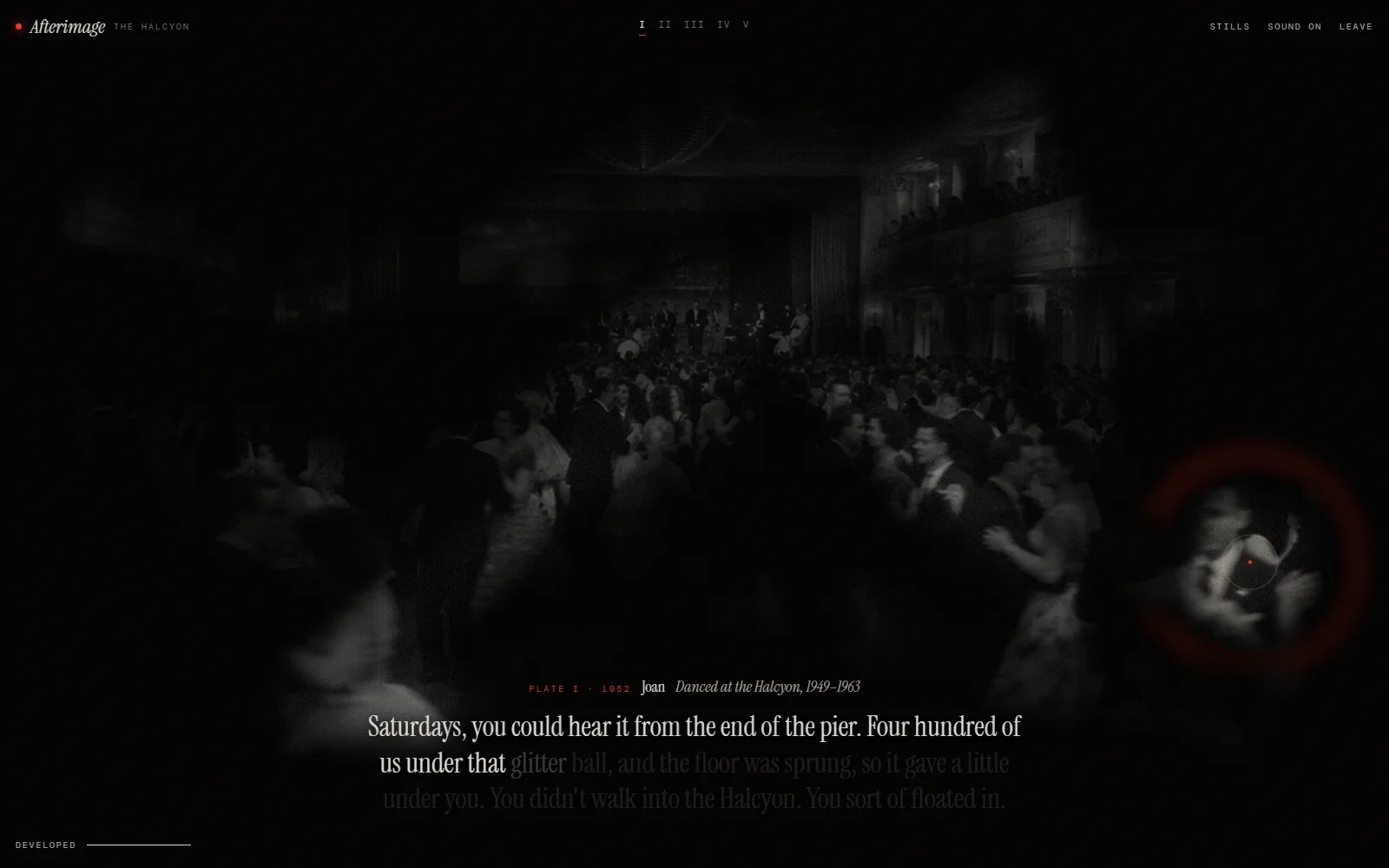
Five photographs from the Halcyon, a fictional seaside ballroom, kept in the dark. Each one appears only where you move, and only for a while. Uncover enough of a plate and it develops, and someone who was there remembers it.
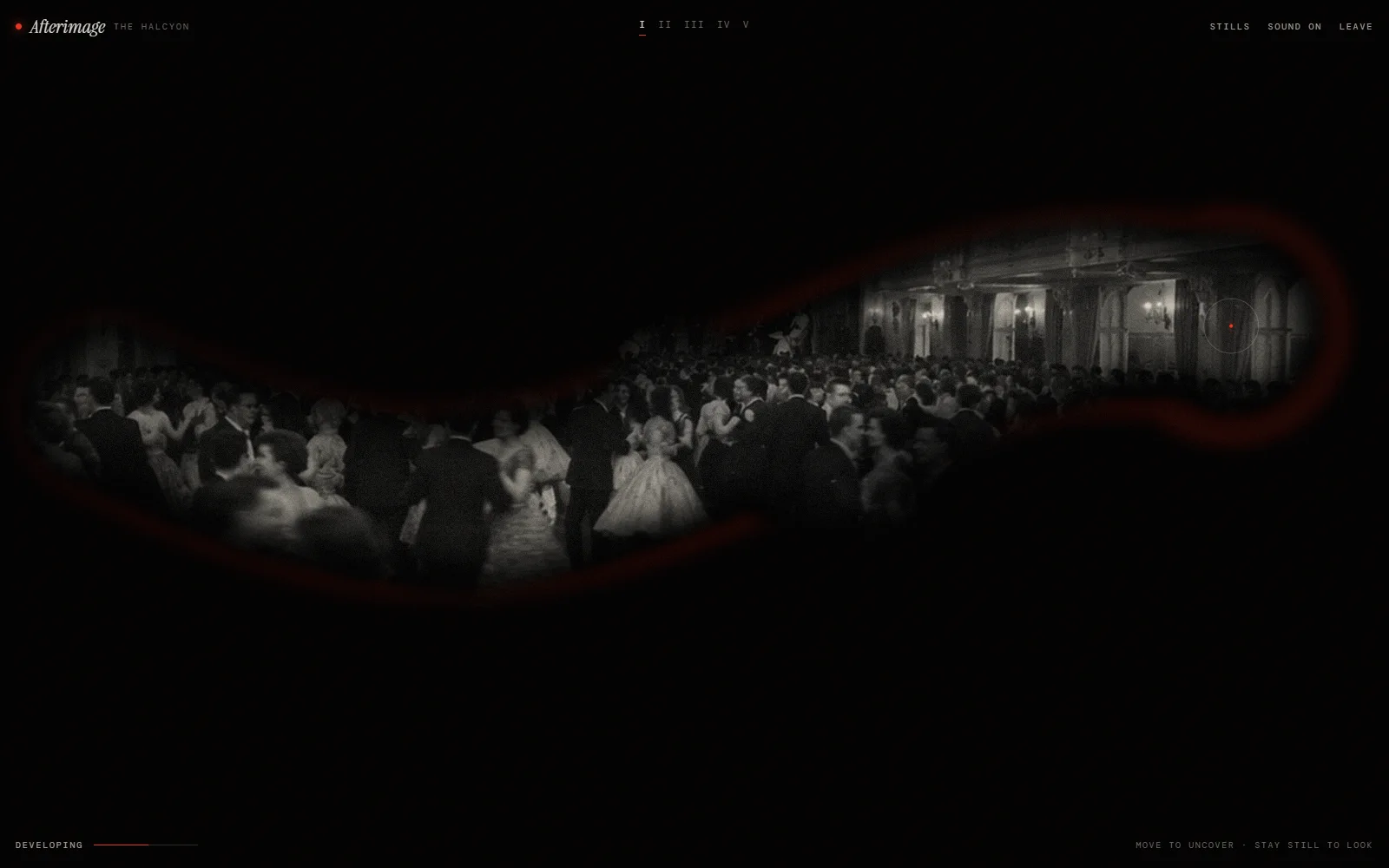
Afterimage is about memory and looking. Your cursor or finger is a small light in a darkroom: the photograph shows where you are, then fades behind you. Two earlier visitors are always looking too, moving and pausing and rubbing at a corner the way anyone does, so what you see depends on who was here before.
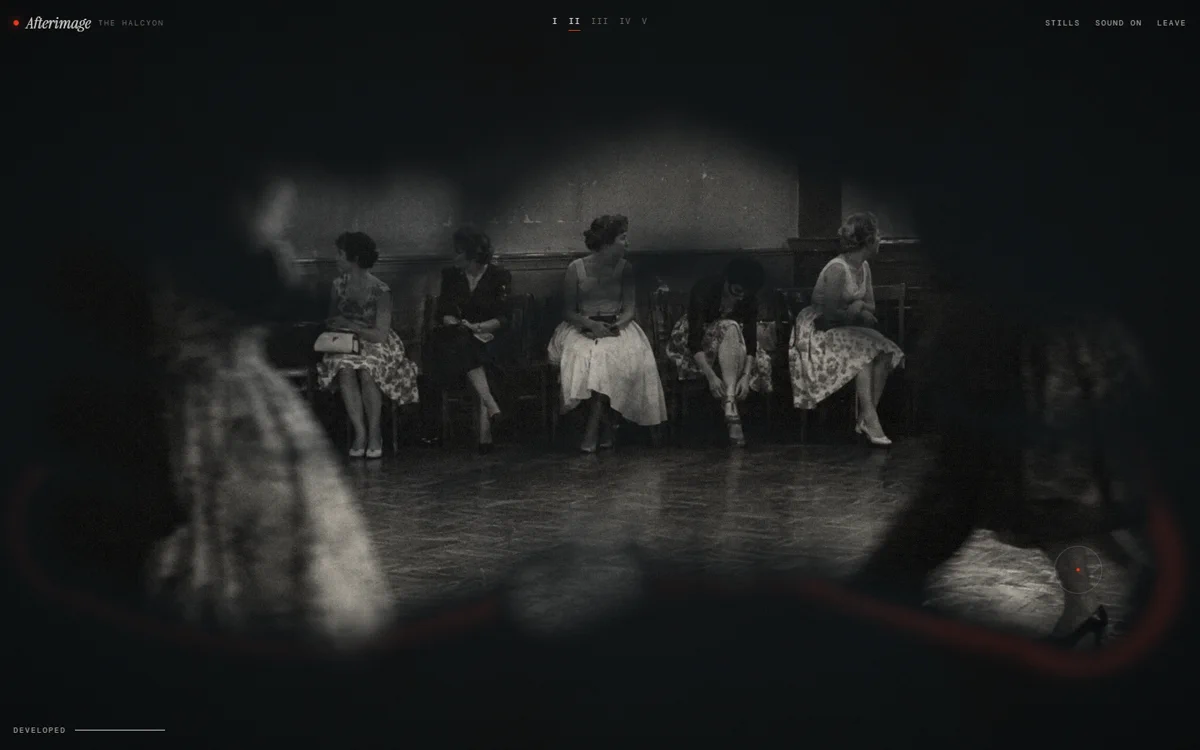
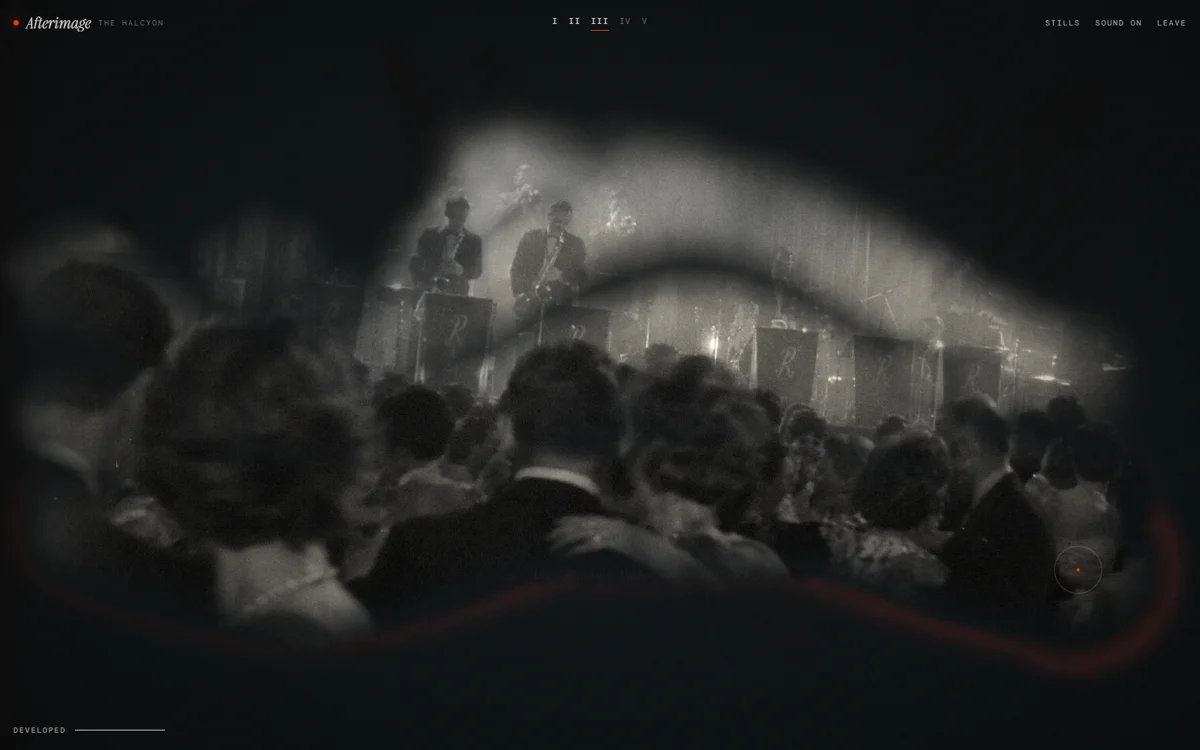
When enough of a plate has been seen, it flashes whole for a moment and lingers as its own negative, the way an image stays on your eye. Then a voice: Joan on Saturday nights, Maureen waiting along the wall, Len in the house band, Arthur and the last waltz, Carol the morning after it closed.
A waltz plays in the next room the whole time. The more you uncover, the more the band comes through the wall. At the end you are given your own contact sheet: only the parts you saw.
Presence reveals
Move to uncover, stay still to look. Nothing is ever visible all at once.
Traces linger
Your path fades slowly, and so do the paths of the people looking before you, and your own last visit.
A plate develops
Uncover enough and the photograph flashes, leaves its negative, and a memory is heard.
Room-ready
Built for the browser first. The same idea scales to a projected gallery room with presence sensing.
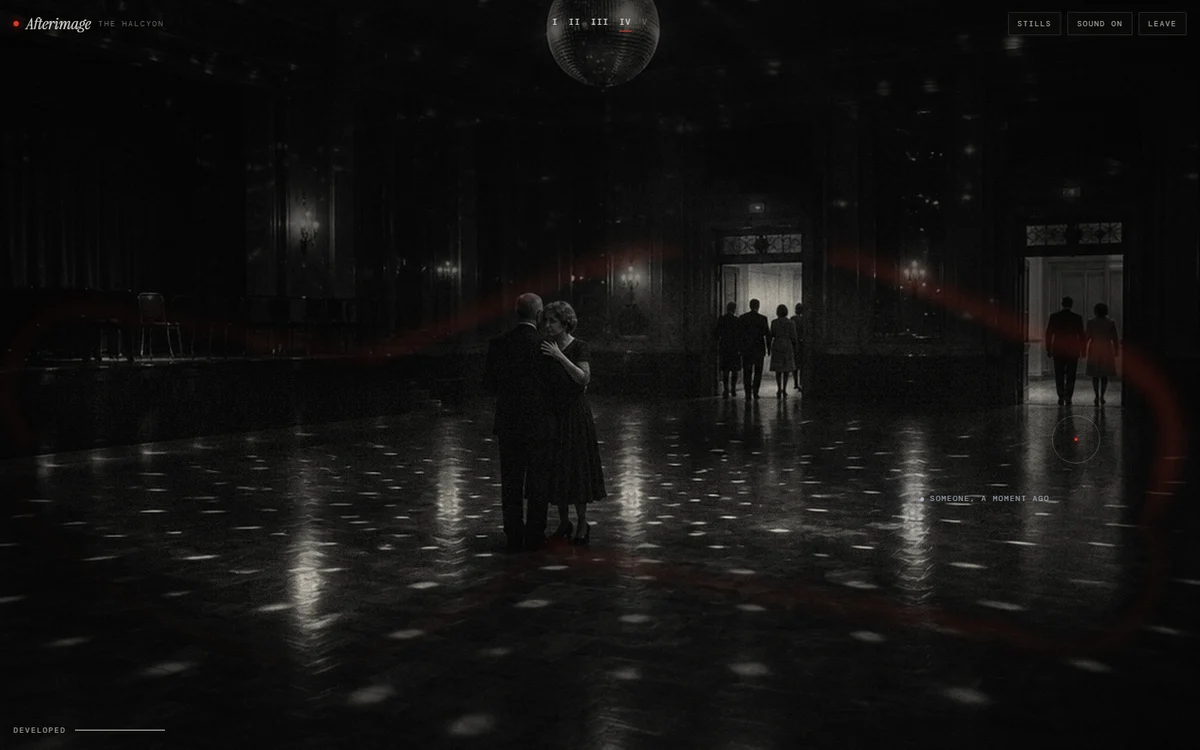
I still count it in threes, walking to the shops.
Arthur, on the last waltz
- JoanSaturday, 1952
- MaureenWaiting to be asked, 1957
- LenThe house band, 1961
- ArthurThe last waltz, 1964
- CarolThe morning after, 1979